Thursday, August 1, 2013

Julian Alps, Jalovec. Mountain and me.

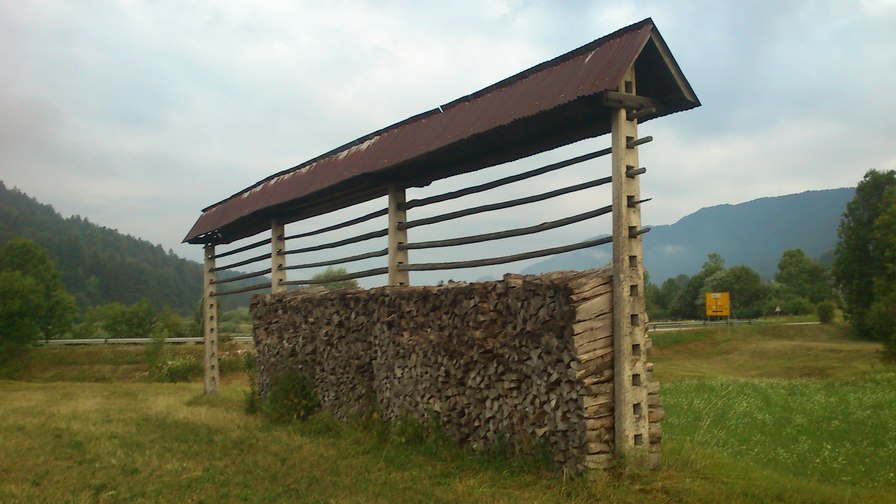
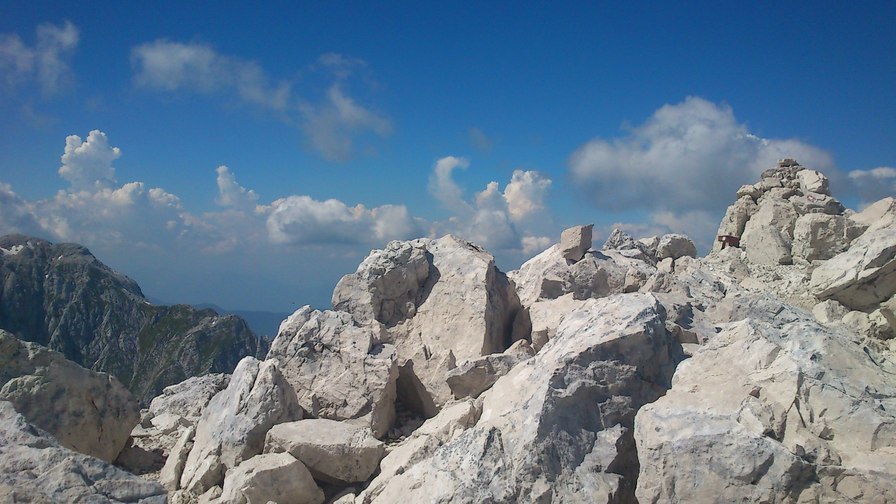
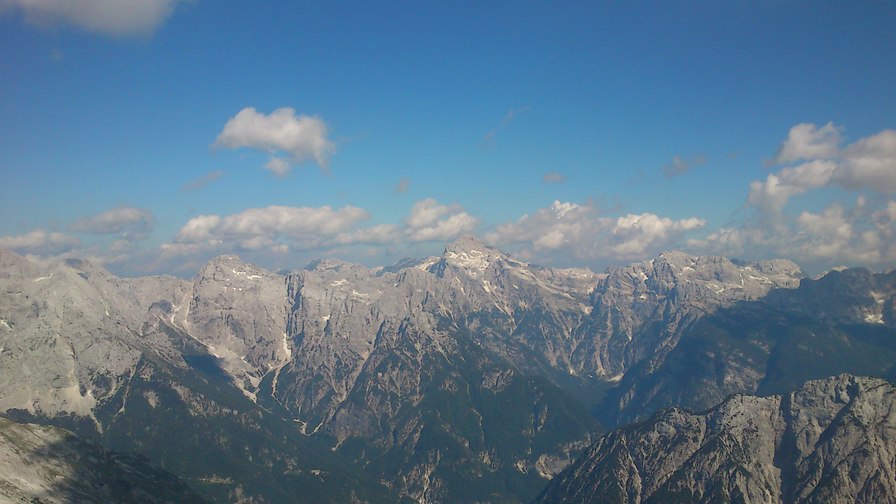
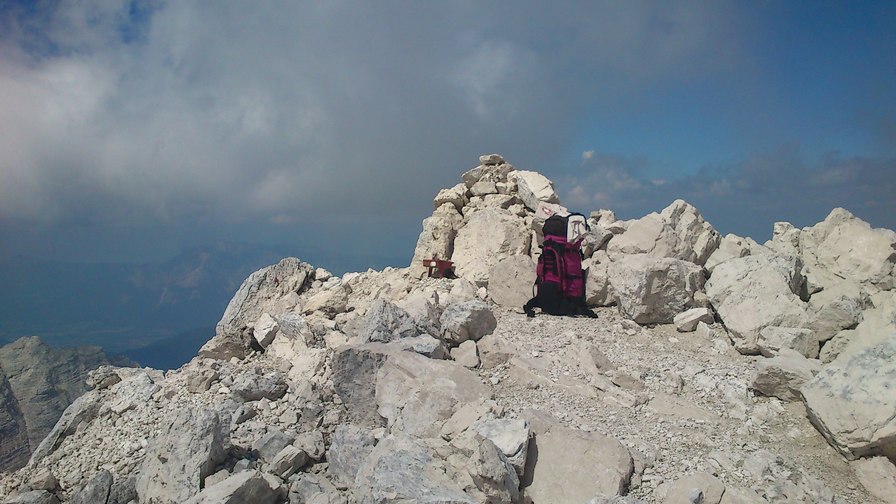
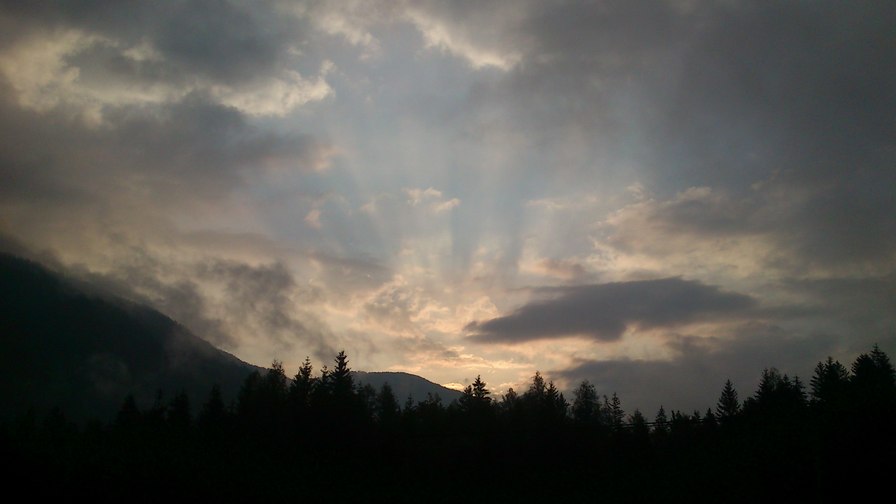
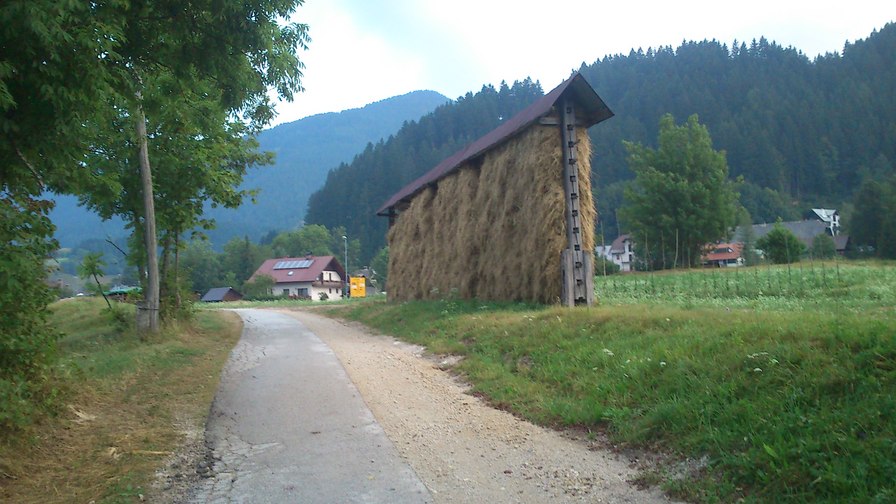
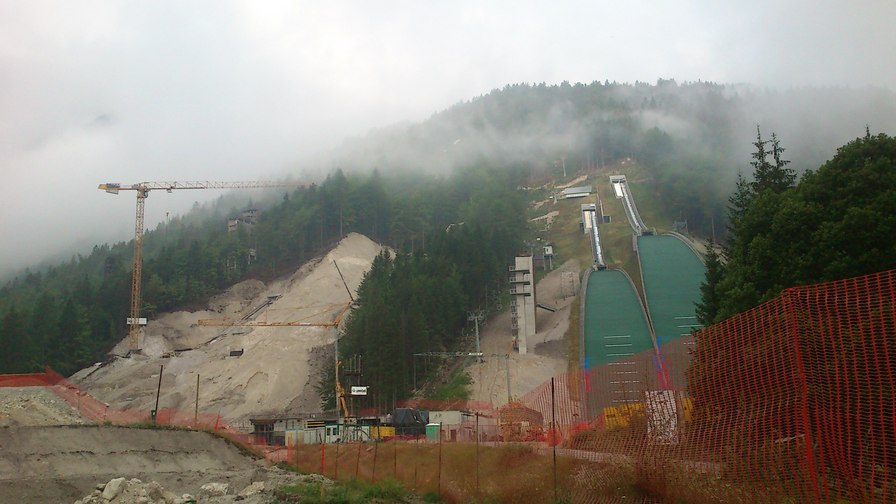
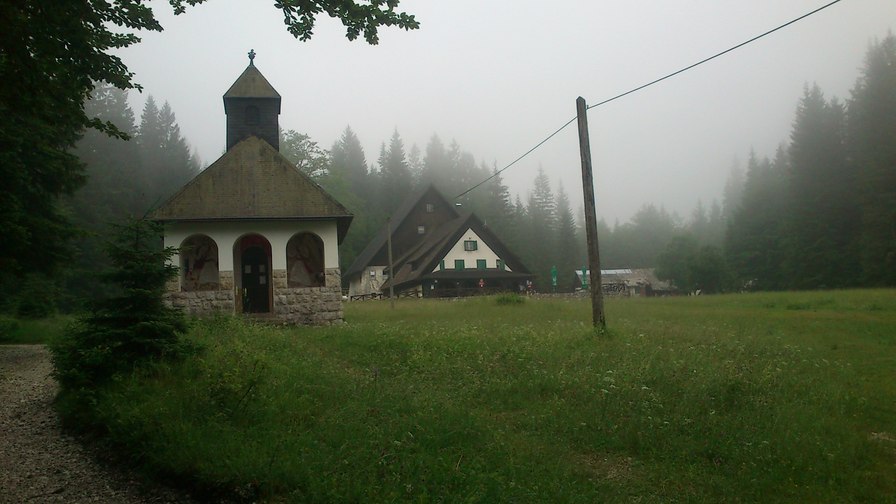
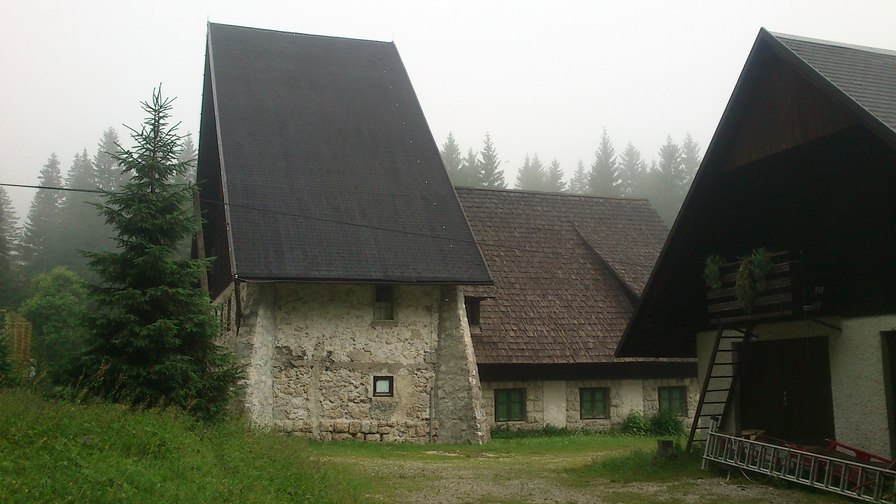
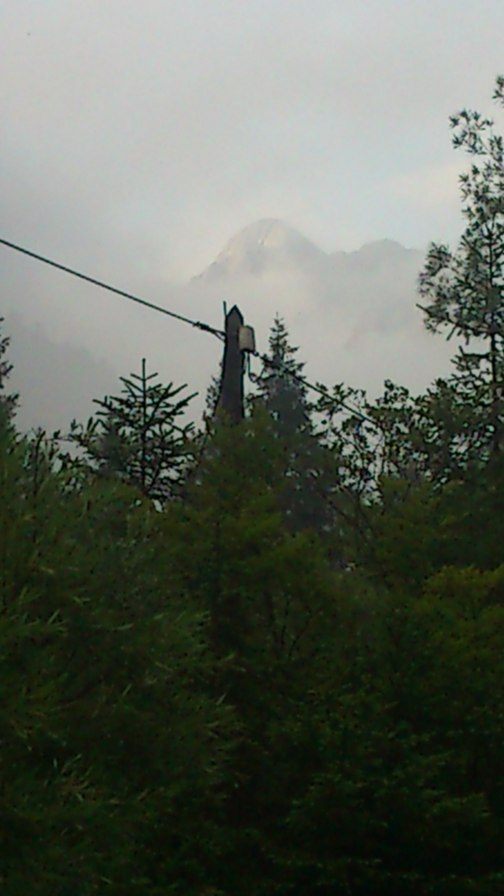
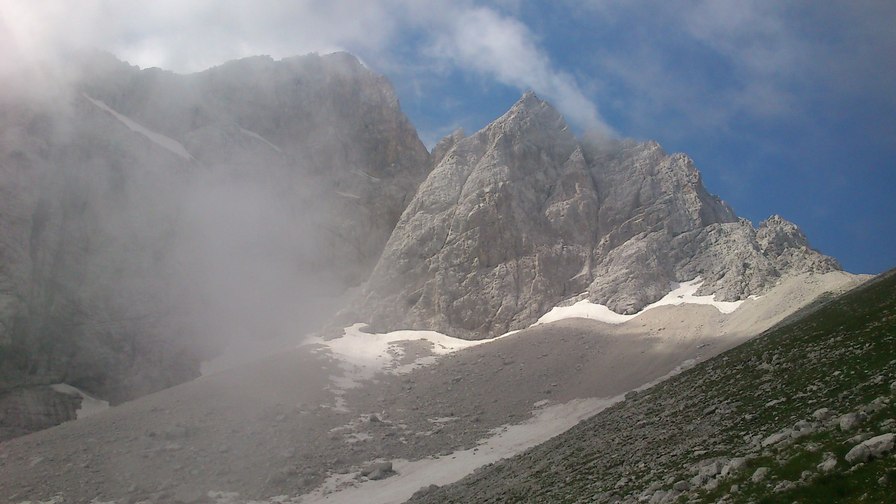
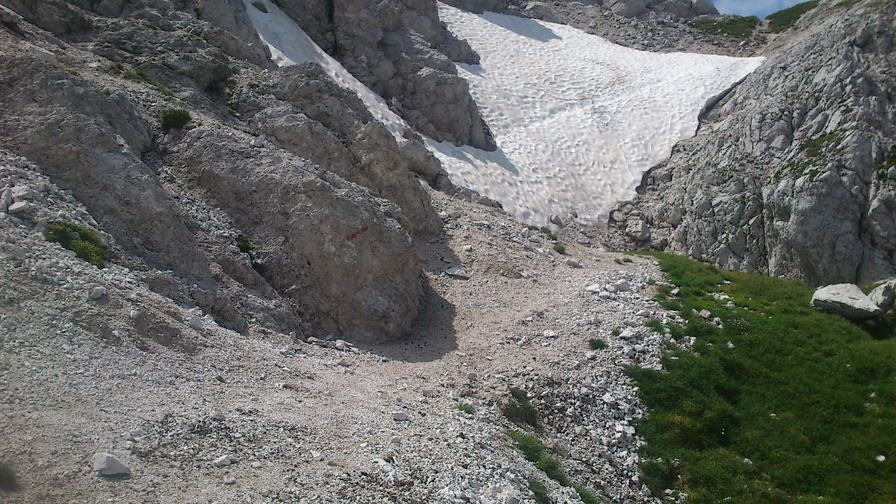
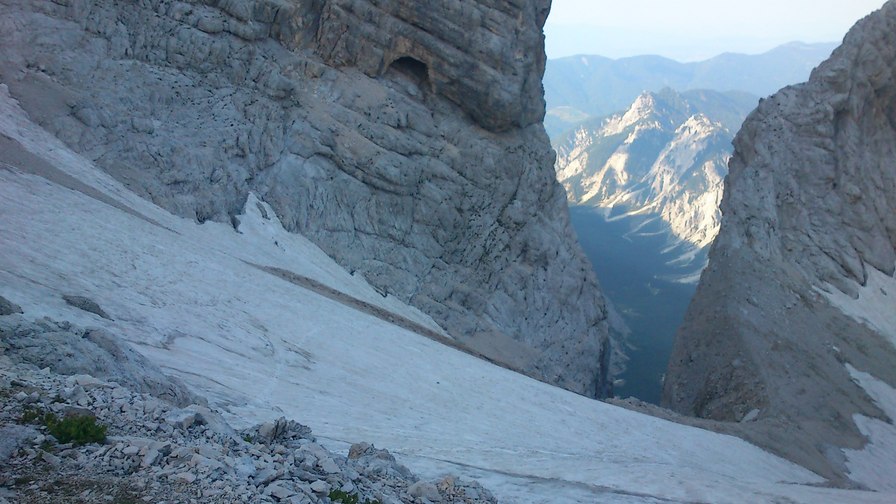
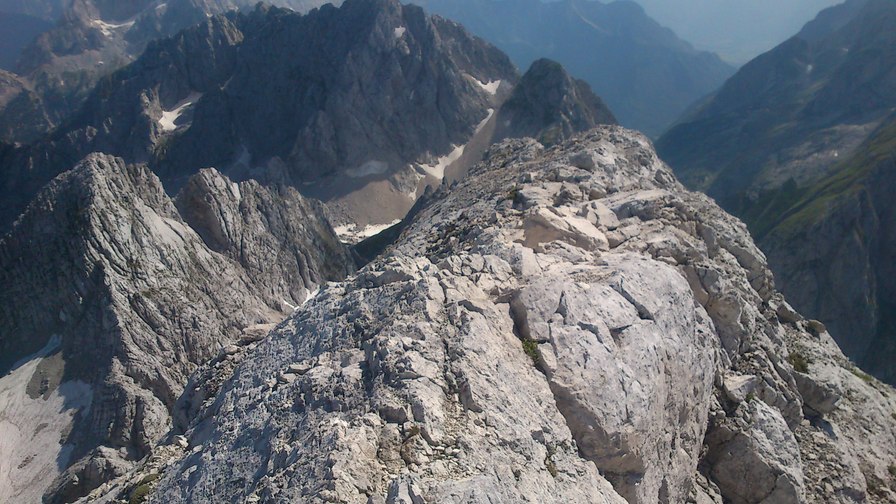
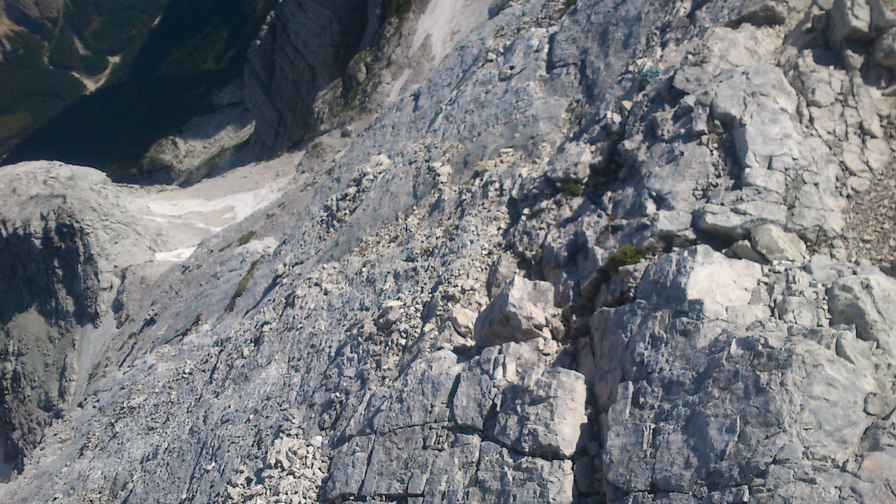
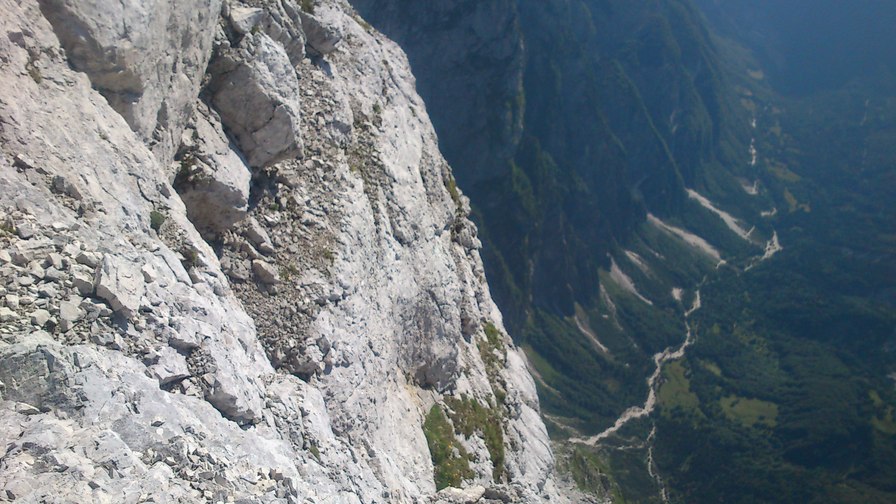
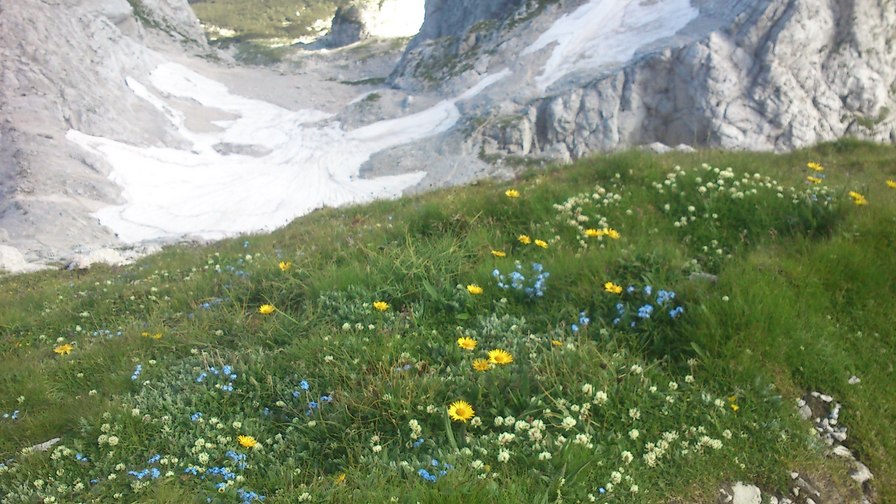
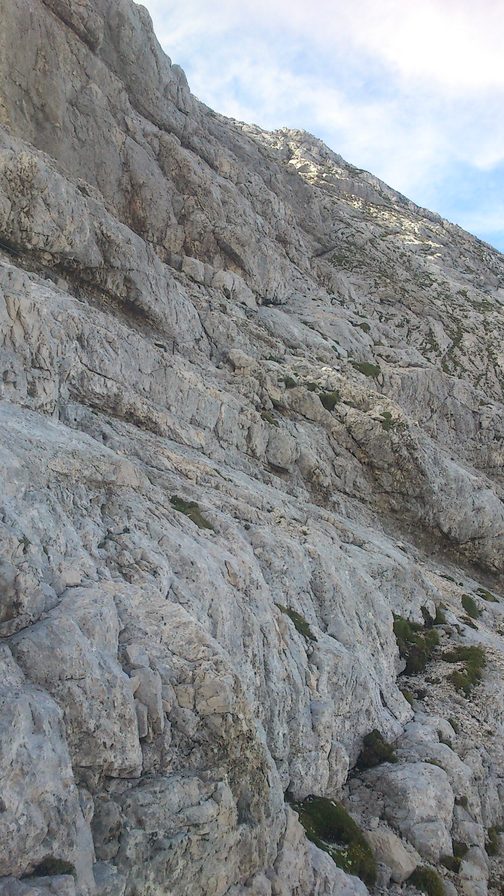
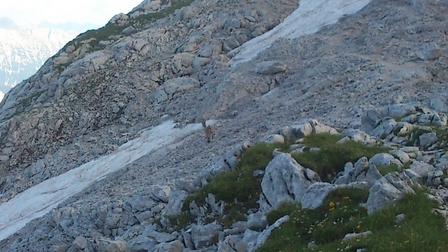
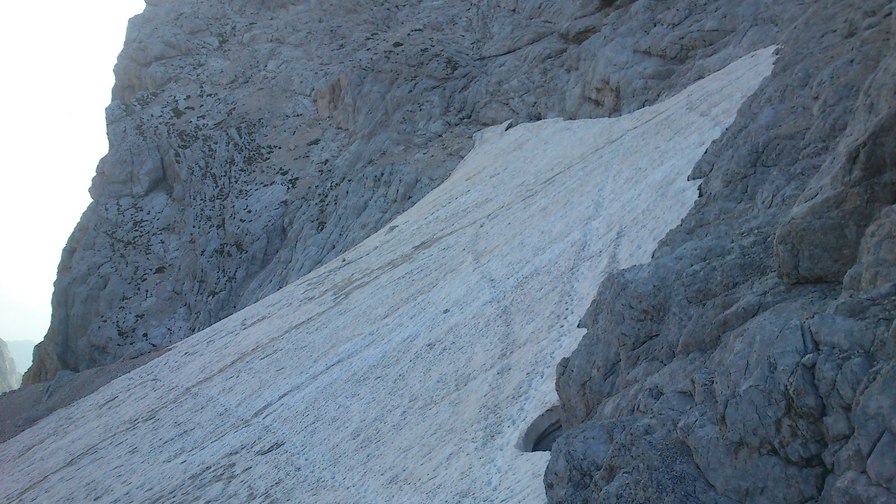
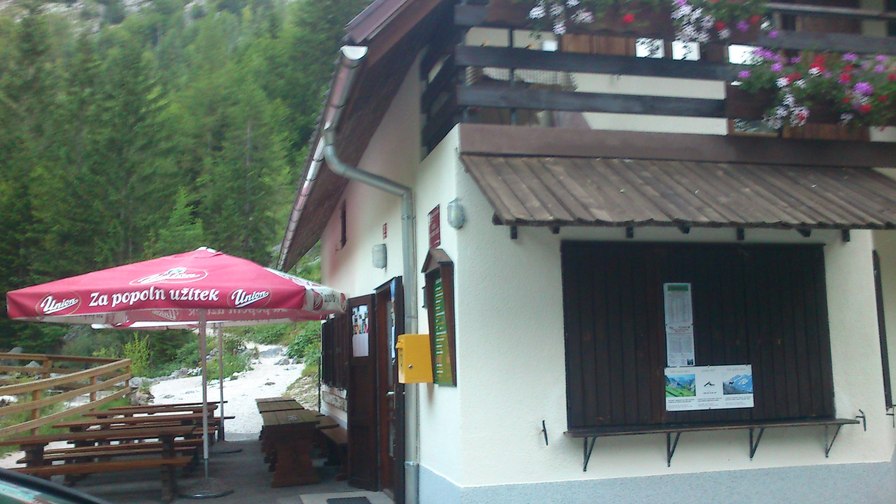
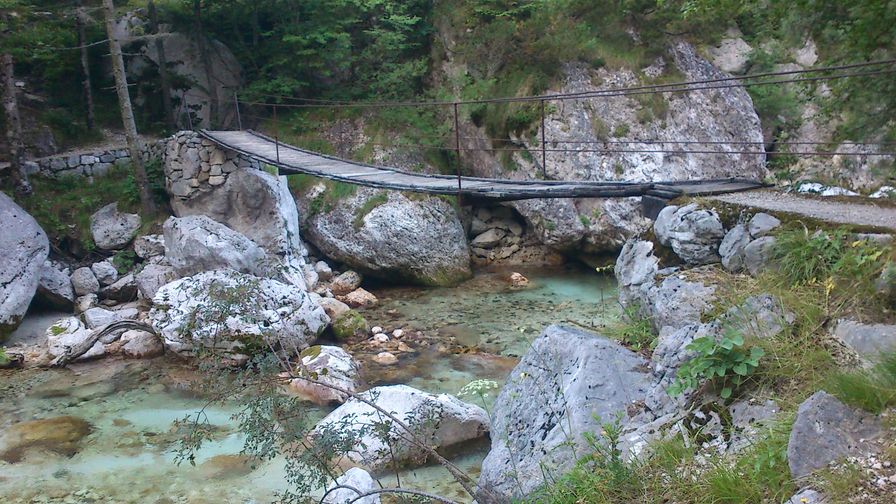
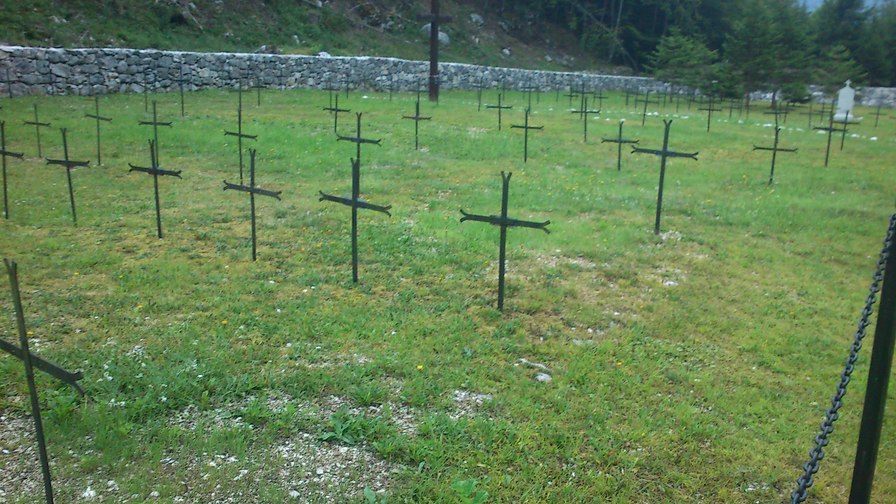
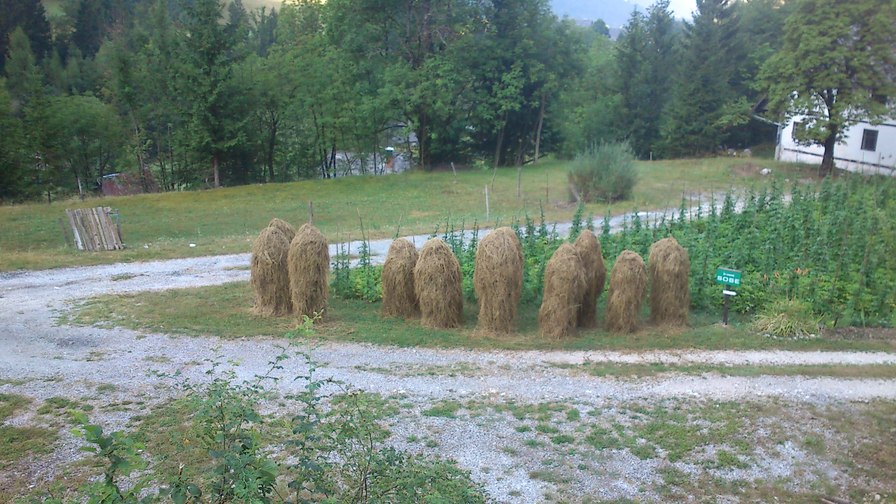
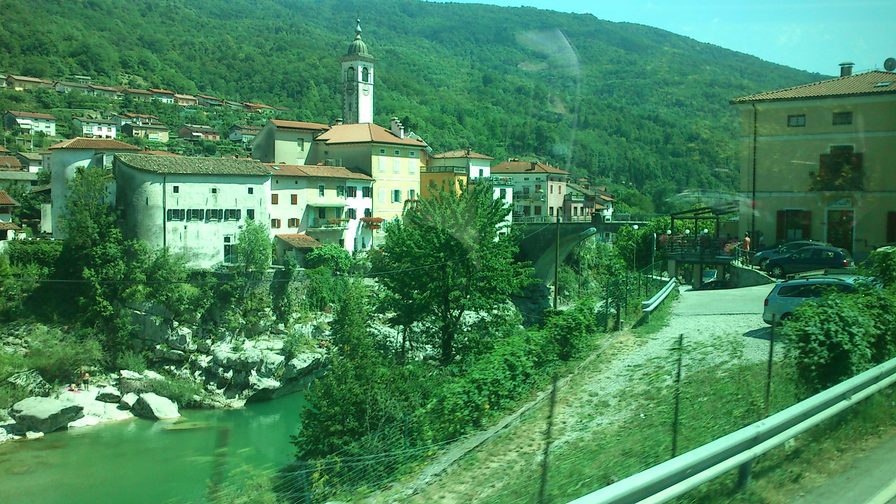
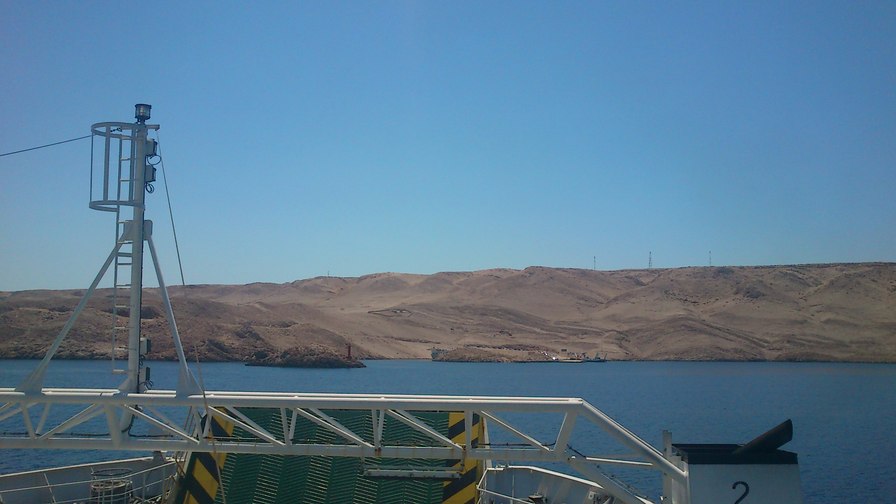
The most memorable part of travels that I took this summer in Europe is a 16-hour walk in Julian Alps in Slovenia, from the Tamar Valley to the Soca Valley over the top of Jalovec. In this picture, which I made ten years ago from the top of another mountain, Mangrt, Jalovec is visible in the foreground on the right. At that time I thought I will soon conquer Jalovec, because at Triglav, the highest mountain there, which is leftmost at the picture, I have already been before. That "soon" lasted for nine years. Too long. Here is now the image of some ten days ago which shows Mangrt, along with the peak of Jalovec: Here is the Triglav from Jalovec, now there is nothing left between: Indestructible backpack, 21 years old and still serving, (this I call a good purchase), on top of Jalovec-it has been on all these tops and at many more places. Jalovec I have not visited because the description of the hike is "long and strenuous". Justified. The path that I have chosen, from Planica to Tamar Mountain House and accross the Kot's saddle, and then accross the top of Jalovec to the house on Soca river source took me 16 hours. According to the Slovenian guidebook, it should take about 14 hours of walking, but the part went to breakfast in the house in the valley of Tamar. Lady who works there, despite the early morning, prepared eggs for me and gave me an additional bottle of water, which was much needed for a hike. I started from Kranjska Gora to Rateče-Planica 5:47 AM, too early for any kind of shop, and I arrived there the previous day from Germany after 9PM, too late to shop. A mentioned lady left a smile in the valley (at so early an hour I could hardly elicited a smile, too), but not her kindness, a big thanks to her. The sun was just rising up behind the mountains: Some photos from Tamar, two possible uses of local variety of traditional hay drying storage: Here is the oldest and largest ski-jumping place in the world, Planica, preparing for an event in 2017: The Home in Tamar Valley: Interesting walls: Here Jalovec briefly showed above the Tamar Valley, most of the time it was in the morning clouds and fog: Top viewed from a hike to Kot's saddle: This ice almost costed me a peak of Jalovec, and maybe much more: What you do not see in that picture is the throat under glacier, something like in the image below, which is from one of the following glaciers, at the actual one I did not think about taking pictures but about staying alive): Lowest part of the rubble below ice was only ten meters, but just above the throat. When I tried to walk there, it was sliding down and I realized that the only way was the one which someone tried before me: over the glacier. But the previous person had ski poles, I had only 14 kg backpack (definitely too heavy) and summer Salomon shoes, which have not yet seen a real ice. And I had a perfectly classic fear of heights. This resulted in a one-hour search for other possible paths, the decision to go across sand and giving it up, even the decision to go back, but I finally went over the glacier. Luckily it was not a too long one, and fortunately did not have too much ice, but real snow, so summer shoes could cope with it. When I crossed it, I almost threw breakfast out from the stomach, so terrified I was! I do not remember that it would ever happen to me (maybe once on Triglav, at the overhanging part of the trail when I was hiking from the western side, but it was to a much lesser extent), but here the feeling of weakness in the legs kept for some time. Did I soften with age, or that was really so dangerous a place? Judge for yourself. Choice of the downward hike that has been described as the easiest in the guide-book was a very good one, although the edge of the ridge was quite steep. I did not dare to even raise the camera up, but I did it from the hip. View to the left: and to the right: Those few hundred meters of the ridge is in an easy thing for "of experienced mountaineer", piece of cake, but I felt pretty much like "retired mountaineer". I will not even try to imagine what crossing it looks like in the wind or a storm, then one could make it only creeping over it. Just below the ridge, above a glacier, flowery meadows. Colors like those are only possible in such a place. This is a steep ridge, down which I did mostly free climbing. It is also quite hard, but one feels safe, clinging to the rock. Mountain goats laugh at clumsy man, I came across a herd which fled from me: Another ice, this time much longer, I had to go in zigzag: There I made a mistake and I did not piled some snow into the bottle. There was a long, two and a half hour brisk walk from the glacier through the woods to the Trenta valley, which will remain in my memory as awful, as I ran out of water. Be sure to take at least 3 liters of water, or take snow from the glacier. At House at the spring of Soca river, to which I have come only at night, nice ladies working there have welcomed me with a simple dinner and a beer, and I slept tight until morning. They were so impressed that I came from Planica over Jalovec that they recognized me a status of honorary mountaineer although I had no membership card (long ago passed times when I had a valid identity card of anything in Europe) and charged me only a membership rate for overnight. They would not even charge for dinner, only beer. My thanks goes to them for such a treatment, indeed, it's nice to see that a genuine effort is still respected. By the way, it was a beautiful summer Sunday and I have met only one couple of hikers around 2PM, all other times it was like in a story, mountains and me. In honor of Soca river, in the morning I valked 12 kilometers to the Soca village. Not a problem, even after such a day as I had the day before, since the scenery is beautiful: Always when here, I make a point of visiting the Russian cemetery from the WWI, where they buried the Russian prisoners killed in an avalanche during the construction of the mountain road to Vrsic Pass. It is one of the most memorable examples of absurdity of war that I know, to start from distant Russia and finish being killed by avalanche in this beautiful valley ... On the way to House Zlatorog (which seems to be not working as a mountain hut any more?), a small haystack, so typical for the Alps: Down the Soca river, approaching Gorica, fine towns: Finally, home sweet home. I think a look at my own island from the sea, when one arrives from Velebit mountain, explains why I am so attached to the stone, whether in the Alps or at the seaside:
Friday, May 31, 2013

Zamyatin's "We"

I re-read this classic, in Polish translation, after 20 or more years. I think I first read it still in my Yugoslavian time, in the 1980-ies. How different the world is now! Then I was living in one of more successful societies which tried to build some kind of utopia, fueled by authoritarian thirst for power. It was not the worst one, oh no, compared to some more gruesome places! Later I lived in ruins of Soviet Reich, early 1990-ies Poland, and I started the new Millenium in more direct descendent of chillingly cold East Germany, just nearby the former Wall-I strolled daily with my kids along the former line of death which was running between the wall and minefields. I also lived in Greece with its endless strikes and Che Guevara-like angry youth on the streets, throwing Molotow's. Currently I am living at the aim of 1100 missiles of Big Red Brother (mainland China), in KMT safe haven, Taiwan, or, how they want to call it, Republic of China. I am writing this list that you would know I am not exactly a virgin when it goes about totalitarian regimes and its aftermats. I know what it is all about.

This novel is least known of the three which marked the 20-th century writing on dystopia ("Brave New World" by Huxley and "1984" by Orwell being the other two). It was also the first, as written in 1920 (!). And I must say, it seems it has some qualities which will make it frighteningly more realistic in times to come. At the beginning it seems a bit naive, but as we go deeper into the story, this illusion dissolves in real, painful struggle of a main hero for...sanity. Sanity without imagination, which is an illness, atavism from some remote, savage, hairy ancestors. It has to be shaved off, like an excess of body hair. This is the only, and last, prerequisite of Happiness. It will be incurred on you, if you happen not to be healthy enough to see it's benefits for you, if you are so hopelessly ill. They, the government, just and mighty, your benefactors, will help you with this minor trouble.

Description of a society which imploded successfully, to thrive in perfect order, for centuries, reminds me of North Korea nowadays. It must be that it's Great Leader loved "We". Is it the only society which I can identify, today, with this novel? China The Great departed from that path, even if The Party (let the Party leaders and their descendants and their pets and their litter live a long and happy life, they are the real Benefactors of their people, working so hard for the country...) claims to follow some old principles, no no, they broke the wall. Soviet heaven collapsed, and the new Oligarhs of Russia are still in the process of building the towers of power... Surprisingly, they are far too humane for it to happen. How about West, is there some hidden gem, which would, like in Orwell's Anglsoc, hint the possible cuckoo's egg? Except for European bureaucracy, which, fortunately, does not yet have arms to impose their vision of happiness on their subjects, I do not see such power. But we should take note, there is something to beware of in that bastard of European Union and Anglo-American vision of Reality. It still has potential for Anglsoc, it always had. Not for nothing it can develop a blind spot in its vision on demand, like it was "not noticing" suffering of East Europe for decades, or failed to notice minor disturbances of common decency in Middle East or Asia, Africa, when millions of people happened to be killed, starved... Or when it was so charmingly enchanted by Mao the Great Pig Eater, and, in fact, still is.

What I learned from Zamyatin this time? I was reminded that there are basic human values which should be pursued whatever the cost. It might seem prosaic, but in this time of Great Globalization sweep, it is not so prosaic as you might think. Life of a Consumer of Goods is onto you, and can you, with clean conscience, say that you are still fully living your human life, when Media is selling you a Celebrity life as a model... Thinking your own thoughts, breathing non-polluted air, drinking clean water, eating natural food, seeing the twinkling stars? Can you, without blush on your cheeks because of a failure, recall real, deep love relationships, worth living through or longing for?

It might seem prosaic, but many, so many, could need Prozac to cope with it.

Thursday, January 10, 2013

Orwell, virtuous man

In L. Trilling's foreword of "Homage to Catalonia" in the Harcourt edition Orwell is described as a virtuous man. And indeed, he is. Of an old fashioned breed even at the time of writing that perfect piece of report from the madness of Spanish war, back in 1937.

I was reading the book before, long time ago as a teenager, and remember appreciating it then. Now, many years later, and having myself an experience of war (as a citizen in a country at war, in Croatia during the Balkan war), I appreciate it even more. I know how it is hard to keep the record straight, and my guts tell me Orwell did it fair.

I understand well his frustrations, and exasperation of having to deal with lies, misleading information, corrupt political parties and government. Everything he was speaking about in that book sounds so familiar. It is everyday bread in country in war.

One thing which is making me wonder is why people in the West became so passive nowadays? Is there a vacuum of ideas, "they" convinced us that politics is corrupt and nobody honest will go into it? We accept such a crooked democracy and do not even get enraged enough by jeopardy of our own rights, money, and in fact, future of our children? Example of Iceland proves that it is not the case in general, they expunged their corrupt politicians and "magi" of dirty finances. Why in other countries nowadays it so often seems as if people would surrender to the worst scums in society, and allow them to enrich and empower on sheer passivity of their fellow citizens?

In my previous post I commented on Huxley, I find he and Orwell have a kind of clear vision, which enabled them to feel a taste of the world in the future. And they were not delighted. What is needed for such a vision? To be aware of miss-perceptions stem from ignorance, wishful thinking and sheer lack of ideas. To be aware that it is we, ourselves, who ought to see things around ourselves and process them and come to conclusions. Not daily paper or, more often today, our bookmarked internet news. Especially not those! It is so easy to trumpet stupidities, but it is less easy to deal with real problems, and deal correctly.

Reading of those authors is definitely a sobering thing to do in those days of general ignorance. And...back to classics. Interpreters obviously miss-interpreted, philosophiers (to use that word of R.M. Pirsig from "Lila" which so well describes that kind of worthless gnawing of words and thoughts which is so often called "philosophy" today) misled... time to go on, children! Use your own brain!

Recently I went back to Caesar; lecture of his Gallic and Civil wars reminded me that Europe is playing this game since time immemorial. Reading Marx' "Capital" reminded me that there is a science in Marxism, of the same kind as Maxwell's or Darwin's theories, which survived well until today, in a bit modernized versions.

Use it! Do not be ignorant of our own present and, in the end, future.

Wednesday, January 2, 2013

Coward Old World

Recently I re-read Huxley's "The Brave New World Revisited", which is a striking narrative about his perception of his own work after two decades. Living in a foreign country which is at a forefront of "development", being an expat from the museum of the Old World, I sometimes have a visceral uneasy attitude towards modern society. Especially I despise politically correct writing, where we all have to pretend to be social anthropologists nodding with a smile when some backward father from a tribal area of Africa circumcises his daughter, as "he is preserving a tribal tradition". I so much prefer writing of F. Burton or Mrs. McGovern , where dirty is dirty, smelly stinks and stupid is simply...stupid. The following text, then, is saying more about the current myself than what I think about Huxley...

We did not come to the use of atomic transport, nor atomic helicopters, even not atomic private airplanes or cars. Huxley did not have to worry about this omission in his "The Brave New World". We are not "happily" modified to be socially useful. Use of drugs, heavy or light ones, for change of our perception of the world, is not welcome. We even limited their use to minimum, in a world which hardly justifies such a limitation. Problem of over-population is not solved, be it by some revolutionary or socially acceptable method. Developed part of the world is on a self-administered extinction path, driven by a wish for personal convenience and financial security. The other, developing, or painfully undeveloped part of the world, which does not have even theoretical chance to reach even a fraction of the wealth of the lucky ones, is on a path of uncontrolled multiplication.

Evil, "immoral" dictatorships crash in glory of civil unrest, (with a little help of "friendly" powers), or implode in simple degeneration of oligarchic power in a well connected, modern world, where revolution can be organized via a SMS messaging. Dictators themselves, chased into rat holes, get their bullet, or finish hanged, deservedly ridiculed to death, or are subject to humiliation of a War Crimes tribunal, which disposes society of them in more hygienic ways. Some even allow themselves to be dislodged by elections, but this is usually when they are safely too old or mortally ill, and are not any more bothered by earthly matters too much.

Religion as a factor did not disappear; quite contrary, its importance increased to insanity, becoming a main player in internal and international affairs of the political powers of today. Interestingly enough, it did not resurrect only in over-populated, tribal societies like that of India or Middle East, or countries stuck in the Middle Age, still waiting for a Renaissance but tuneled into the hypertech society of today, as China. No, its evil, debilitating or straightforward ill influence is sourcing from developed democratic societies like USA-the best example is a revival of the application of Creationism, which even found its path to the school curriculum.

It might be that the traditional religions as Roman Catholicism lost a bit of their appeal, under weight of sexual and financial scandals, but disoriented religions like Scientology, or politically powerful ones like Mormonism are sweeping the West. The East is overridden by "masters" of suspicious kind, procuring salvation (with only a small fee) in diminishing of wishes and will for anything on Earth. Probably as they do not have anything else to offer than nothingness-in the old days one would go to the nearby caves to find a Master in meditation, under his beard, to learn about the world. That Master would eventually get a bowl of rice, but rarely would go into building a fancy temple for himself and put purple robes. Consequence is a rare virtue, indeed.

A current trend is also a kind of swap of social order: State capitalism, which, reaching the respectable age, deceased together with Soviet Union and their gerontocrats, reincarnated in the USA, which slowly, but at a steady pace, started its shift to becoming a Third World country. Former socialist Eastern Europe countries, after a short phase of wild, predatory capitalism, transformed into a post-neokolonial status, owned by a Western financial mega-corporations. Those are mostly known for their fast retreat, after leaving the unhappy country under occupation of their kin, blood-sucking leeches of banking world, which will make certain that slaves would not have their say for at least current generation.

Africa, too poor to be sucked of blood in such a civilized way, after extremely successful operation of fathers and forefathers of today entrepreneurs, successfully drowned in a bloodbath orchestrated by their Western "friends". They are interested only in unlimited sale of the old and new weaponry there, and after leaving few generations of fatherless, homeless children to play games of war until extinction, disappeared in utter boredom.

Interestingly enough, we did not allow to be indoctrinated, awake or while sleeping, hypnopaedia remained where it was, at isolated voluntary self-learners or enthusisast. Science, that "wonderfully convenient personification of the opinions, at a given date, of Professors X, Y and Z", did not produce more than a succession of Professors. They came and went into honorable past of dusty University libraries, funded by well-wishing benefactors. Society is a too inert entity of a dynosaur ass sensibility, to be moved by such a benevolent creatures like humanists.

Over-organization of a Society is here, in a caricature of efficiency given by over-bureaucratization: see the example of European Union (beware of choking in laughter or crying!). For over-organization, good managing ideas, and also good managers, are needed. Not masturbators of powers we experience today in Europe. Could anyone sane consider European bureaucrats of today being anything else than fleas in the fur of an moult dog? Hardly. They are far, far away from all-knowing father figures of Huxley's technocracy.

Propaganda, under or out of dictatorship, became a domestic animal of today, but only in completely degenerated organisms like North Korea, where yelling of colonels came to TV and radio. Yes, in China, but even there only rarely, education under eye of the Party brought some individuals to caricature of Huxleyan vision. They are easily laughed-off even by their own kind. Human mind is far harder to condition than one could imagine, listening the words of Professor Y. Luckily, what Huxley considered under "What can be done?" is still on the list of rare surviving humanistic thinkers which did not go into (over)production of recipes for happy society or into a stamp-collecting.

It is heartening to see how completely Huxley fails to predict a future following from hands, and brains, of a generation eating hamburgers in front of a TV. Some wile minds would say that example of Obamamania and already mentioned introduction of USA as a Third World country are an effect of this, but I would rather discard it as a daily politic play, unimportant at a scale of almost 100 years of Huxleyan anti-utopia. There are many good things that particular generation did, or at least tried to do. I am less enchanted by what my generation, their children, is doing. Luckily, I see that my own and my generation's children still uses their own brain, they check book shelves, do Science and do Arts. In a world we gave them, where computers became so omnipresent, I think they are doing well, extremely well. Good luck to all of us, we will need it, not because of someone doing this or that, but because of sheer powers of Nature. We seem to be going to the stage of the cavemen of Concrete Age, still waiting for the invention of Fire.

Thursday, December 27, 2012

Ruccola

*
The World might fell apart,
stars collapse,
galaxies may run away...
but ruccola, oh, ruccola,
it has to be!
*

Saturday, October 13, 2012

Brave women, brave men: Janet Montgomery McGovern

In his post "Among the Headhunters of Formosa by Janet B. Montgomery McGovern" blogger Balancing Frogs gives pretty thorough account of this superb book, written by one brave woman back in 1920-ies. I wrote about it in Croatian, in astrosailor on "Headhunters..." , but since with Mr. Brendan we both found the same lack of information on author, who obviously was an interesting woman, I decided to search deeper. With help of a friend, genealogy researcher Nora D. in USA, who was already helping me very much in work on a genealogy project for my island, I got to the Daily Northwestern newspaper in Illinois, from January 5, 1939, where an obituary was issued few days after the death of Ms. Montgomery McGovern.

I copy it here:

The text is:

"Mother of Prof. McGovern dies"

,

"Mrs. McGovern was a world traveler, author, teacher Mrs. Janet Blair Montgomery McGovern died on December 30. 1938. in Loma Linda, California. She was the mother of Dr. William Montgomery McGovern, professor of politycal science in Northwestern University. Mrs. McGovern was born in Rome, Ga., on October 9. 1874 and was the daughter of a distinguished soldier in the Confederate army, Col. Alexander Blair Montgomery and his wife, Ella Janet Mitchell. After graduating from Shawter College, she also studied at Oxford University in England, where she took a degree. She taught at Briarcliff Manor and the Kyoto Girls school in Japan. Mrs. McGovern travelled extensively in Europe and Asia an as the result of her travels she published several books, including "Among the head-hunters of Formosa" and "Butterflies of Taiwan". She was also newspaper correspondent for several periodical including the New York World, the Literary Digest and the Kobe Chronicle. The last few years she was a tutor in anthropology at the university of New Mexico. As the contributor to the Journal of the Royal Anthropological Institute she attracted considerable attention."


From this article we see she remained active after her return to USA: she wrote scientific articles, was a tutor in New Mexico and, obviously, respected enough that a newspaper across the country would mention her passing away with reverence. Her son was a model for Indiana Jones (only that his life was much more adventurous than Harrison Ford's role), but I suppose she should be a model for Brave Woman of the times. Here I am at least putting the online available information straight.

Saturday, August 9, 2008

Russell

Since some time I am reading Bertrand Russell's classic work on history of philosophy "History of Western Philosophy". It is so classic that it is a shame to say I stumbled upon it only so old as I am, when I should read it some 25 years ago. Well, I obviously had more important things to do, and to read about Western philosophy, I had to submerge in this Confucianistic island of Formosa.

When it is like this, I notice that after living in Greece, and visiting it recently, I appreciate Russell's illumination on Greek philosophy. I am speaking as a delighted reader of Homer, rather than as a 21st century tourist, sure.

What kicks in Russell's writing is witty comments from time to time, so nice is how he makes the matter alive with this, not dusty-philosophy of the forgotten library shelves.

I reccomend this review, indeed. Take your time with it, it is not something to be swallowed...but rather licked with pleasure when time permits, and mind is at its leisure mode.